Marwadi Couple Viral Video: 7 Crucial Facts About the Real Internet Trend & Digital Safety
Marwadi Couple Viral Video explained with verified facts, viral trend context, privacy concerns, online scams, legal risks, and practical digital safety tips.
By Umesh Yadav · Published
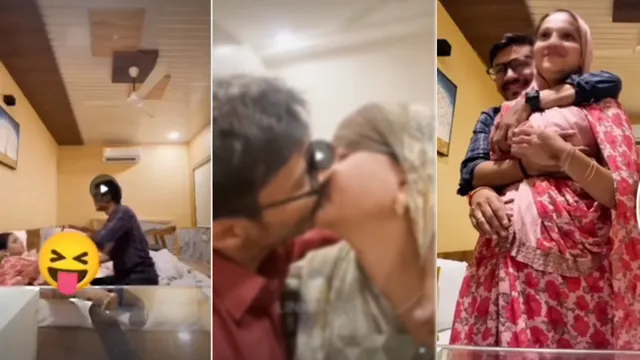
The phrase “Marwadi couple viral video” has become a popular search term used for very different kinds of Rajasthani and Marwari-related videos circulating across social media. Some refer to wedding dances or romantic reels, while other searches appear to point toward alleged private or explicit footage. That distinction matters.
There is no reliable evidence that every video being described online as the “Marwadi couple viral video” belongs to one particular couple or even to one event. Recent searches also show multiple unrelated Marwari and Rajasthani couple videos receiving attention online. For example, a 2026 wedding video involving a Dutch bride and her Marwadi groom went viral after she performed a Rajasthani dance at their celebration. In 2025, a Gujarati-Marwari couple also received widespread attention for a wedding dance video.
At the same time, Rajasthan has also seen a separate 2025 controversy involving an allegedly obscene video filmed in Jaisalmer. Police registered a case and warned people against sharing the footage. Reliable reporting on that incident does not establish that it was a “Marwadi couple viral video.”
So, what’s the real story behind this search trend? And what should people do when a supposedly “original” or “full” video appears in WhatsApp groups, Instagram comments, Telegram channels, or unfamiliar websites?
This guide separates verified information from online rumours and explains why digital safety should be part of the conversation.
1. What Does “Marwadi Couple Viral Video” Actually Mean?
The first thing to understand is that “Marwadi couple viral video” is not a precise news description.
It is a broad search phrase that can be attached to wedding clips, dance reels, traditional dress videos, relationship content, comedy videos, travel reels, or alleged private footage. Search platforms often group similar terms together because people type variations of the same idea.
That means one person searching for a romantic Marwari wedding video and another person searching for an alleged leaked recording might see overlapping keywords.
A search keyword is not proof
This is one of the most important lessons in viral-content reporting.
A title such as:
“Marwadi couple viral video original”
does not establish that the video is original.
Likewise, phrases such as “full video,” “uncut,” “real couple,” “private clip,” or “watch before deleted” aren't evidence by themselves.
The internet has a knack for turning curiosity into clicks. Once a phrase begins trending, hundreds of accounts can reuse it without having any direct knowledge of the original event.
Why the wording creates confusion
“Marwadi” is a common internet spelling, while “Marwari” is also widely used in English-language writing. Search engines can associate the two terms because users frequently search for the same subject using different spellings.
The word “couple” adds another layer of ambiguity. It doesn't tell us whether the people are married, dating, performers, content creators, relatives, or simply participants in a public event.
So before believing a viral claim, the basic questions should be:
- Who are the people?
- What happened?
- Where was the video first published?
- Is there a credible source confirming the story?
- Is the video public content or allegedly private material?
- Has a police department, court, reputable news outlet, or verified account confirmed the claim?
Without those answers, the safest description is simply an unverified viral claim.
2. Marwadi or Marwari? Why Both Terms Appear Online
Readers may notice several different spellings when searching for the same topic.
“Marwari” is commonly used in English-language references to the Marwari community, language, and culture. “Marwadi” is also commonly seen in social media hashtags, entertainment searches, reels, and everyday online usage.
This difference isn't unusual.
Search engines don't necessarily treat spelling variations as completely separate topics. They may understand that users searching “Marwadi couple,” “Marwari couple,” “Rajasthani couple,” and related phrases could be looking for overlapping content.
For publishers, this makes natural keyword variation useful.
A well-written article can mention:
- Marwadi couple viral video
- Marwari couple viral video
- Marwadi viral video
- Marwari viral video
- Rajasthani couple viral video
- viral Marwadi reel
- Marwari wedding video
- Rajasthan viral couple video
The important thing is not to force these terms repeatedly. Search optimization works better when the language sounds normal and actually helps readers.
3. Why Couple Videos Can Suddenly Go Viral
There is nothing mysterious about why couple videos attract huge attention.
Wedding dances, surprise proposals, cultural performances, humorous interactions, and emotional moments are naturally suited to short-form platforms. A viewer understands the basic situation within seconds, which makes the content easy to watch and share.
A good example came in March 2026, when a video showing a Dutch bride performing a Rajasthani dance for her Marwadi groom spread widely online. India Today reported that the clip attracted significant attention after being shared on Instagram, while another report noted that the video had crossed millions of views.
Another Marwari-related viral wedding moment surfaced in February 2025. Hindustan Times reported that a Gujarati-Marwari couple's dance to “Chaudhary” became a major Instagram hit, with the clip receiving more than 35 million views at the time of publication.
The algorithm rewards attention
Short-form video platforms can amplify content rapidly when users:
- Watch a video for a long time.
- Rewatch it.
- Comment on it.
- Share it privately.
- Post reaction videos.
- Search for the people involved.
This creates a feedback loop.
Also read: Dingkari Nomil Viral Video 2026: Truth, Trends, Biography, and Internet Buzz Explained
The more people talk about a clip, the more curious people become. Then more accounts repost it. Suddenly a video that started with a small audience can appear everywhere.
Curiosity can also create misinformation
The same mechanism can work against accuracy.
A person sees a dramatic caption, searches for more information, finds another account repeating the same claim, and assumes the second account confirms the first.
But if both accounts copied the same unverified post, there still isn't independent confirmation.
That's why viral does not automatically mean verified.
4. Real Examples of Marwadi-Related Viral Couple Videos
Not every “Marwadi couple viral video” search is connected to scandal or privacy issues.
In fact, several legitimate videos have gained attention simply because viewers found them entertaining or culturally interesting.
The 2026 Dutch bride example is particularly useful because mainstream outlets independently described the wedding event and identified the context of the footage. The story centered on a bride surprising her Marwadi groom with a Rajasthani dance, followed by the couple dancing together.
The 2025 Gujarati-Marwari wedding dance story offers another example of how a cultural moment can become a social-media phenomenon. The couple's performance was presented as a joyful wedding moment rather than a privacy controversy.
Why these examples matter
They demonstrate an important point: the same keyword can describe completely different types of content.
One viral phrase may refer to:
| Type of Video | Typical Context |
|---|---|
| Wedding dance | Public celebration |
| Traditional dress reel | Lifestyle/culture |
| Romantic reel | Social media content |
| Comedy clip | Entertainment |
| Travel video | Tourism |
| Private-content allegation | Privacy and cybercrime concern |
| Fake or edited clip | Misinformation or manipulation |
Therefore, an article shouldn't assume that a phrase such as “Marwadi couple viral video” automatically points to the most sensational interpretation.
5. What Happened in the Jaisalmer Viral Video Case?
A separate incident in Rajasthan received substantial media coverage in May 2025.
According to PTI reports published by ThePrint and The Tribune, police in Jaisalmer registered a case after an allegedly obscene video involving a 70-year-old man surfaced online. Police warned people not to circulate the footage. Two people were later arrested in connection with the production and uploading of the material.
This case is relevant to the wider discussion of viral videos, but it should not automatically be labelled as the “Marwadi couple viral video.”
Why?
Because the reliable reports describe a specific police case involving an elderly man and two suspects. They don't establish the existence of one famous Marwadi couple whose private recording suddenly leaked.
That's an important editorial distinction.
What reliable reporting confirms
The available reports establish that:
- A video surfaced online in May 2025.
- Jaisalmer police registered a case.
- Authorities warned against sharing the footage.
- Two people were arrested in connection with the case.
- The investigation involved allegations related to filming and uploading obscene material.
What shouldn't be assumed
Readers shouldn't automatically conclude that:
- every “Rajasthan viral couple video” refers to this case;
- every person shown in a similar-looking clip is connected to it;
- a social media account posting an “original” version is authoritative;
- every viral image or screenshot belongs to the incident.
This is exactly where responsible reporting beats sensational headlines.
6. Why “Original Video” and “Full Video” Searches Can Be Dangerous
Searches for “original video,” “full video,” and “uncut clip” often lead users away from reputable reporting and toward pages designed primarily to generate clicks.
Some pages may use a familiar tactic:
Viral headline → curiosity → fake player → suspicious link → download or login request.
The user thinks they are about to see a video. Instead, they may encounter:
- phishing pages;
- fake download buttons;
- malicious applications;
- aggressive advertisements;
- fake social-media login screens;
- notification scams;
- suspicious browser redirects.
India's Cyber Swachhta Kendra specifically advises users not to click links carelessly, to keep software updated, and to pay attention to security warnings.
The safest rule is simple
Don't download an unknown file just because someone says it's a viral video.
And never install an APK sent by an unknown account simply to watch a clip.
That's a classic trap.
Be especially cautious with:
“Video deleted from Instagram - download here”
Also read: Esut Girl Viral Video Scandal Original Clip: What Happened and Why the Internet Is Reacting
“Original 18+ clip - verify your age”
“Watch full video - install this app”
“Telegram link - no restrictions”
“Google Drive original - request access”
“Exclusive clip - enter Instagram password”
None of these messages proves that a real video exists.
7. AI Deepfakes Have Made Viral Video Verification Even Harder
There is another complication in 2026: manipulated and AI-generated media.
A face can potentially be altered, replaced, or digitally combined with another piece of footage. Audio can also be modified. Screenshots can be edited. Old videos can be reposted with entirely new captions.
That means “I saw the video myself” is no longer enough to establish the identity of a person or the circumstances shown.
Warning signs of manipulated viral content
Look out for:
- inconsistent lighting around a face;
- unnatural facial movement;
- strange lip-syncing;
- blurred or distorted hands;
- sudden quality changes;
- missing original source;
- cropped screenshots;
- captions that make dramatic claims without evidence;
- multiple accounts using exactly the same wording.
One suspicious clue isn't proof of manipulation, but several together should make you slow down.
Don't turn uncertainty into certainty
A responsible article should say:
“The claim could not be independently verified.”
rather than:
“This is definitely fake.”
unless there is actual evidence to establish that conclusion.
The same principle applies to allegations involving real people.
8. Privacy and Consent Matter More Than Going Viral
A person appearing in a video doesn't automatically mean everyone has permission to reproduce that video forever.
The distinction becomes particularly important when material is private, intimate, humiliating, or shared without consent.
Even when something is already circulating online, reposting it can increase the harm.
A viral clip can be:
- downloaded permanently;
- reposted on multiple platforms;
- saved in private groups;
- turned into reaction content;
- indexed by search engines;
- copied into other websites.
In other words, one share can create dozens of new copies.
“Everyone is sharing it” isn't a privacy argument
Popularity does not create consent.
Nor does the fact that an image or video has already appeared on one website automatically mean that anyone can redistribute it.
For this reason, responsible publishers should avoid embedding or linking to allegedly private or explicit recordings.
9. What Indian Law Says About Privacy and Explicit Online Material
Indian cyber law contains provisions relevant to the unauthorized capture, publication, or transmission of private and sexually explicit material.
Section 66E of the Information Technology Act addresses certain violations of privacy involving the capture, publication, or transmission of images of a person's private area without consent in circumstances violating privacy. The provision provides for imprisonment of up to three years, or a fine of up to ₹2 lakh, or both.
Section 67A addresses publication or transmission of material containing sexually explicit acts or conduct in electronic form. The statutory provision provides for punishment on conviction, with higher penalties for subsequent convictions.
The exact legal provisions that apply in a particular incident depend on the facts, evidence, and investigation.
Why this matters for social-media users
A person might think:
“I didn't record it. I only forwarded it.”
That doesn't necessarily make the action consequence-free.
The legal position depends on the facts and the applicable provisions. Anyone dealing with potentially unlawful material should avoid redistributing it and use official reporting mechanisms instead.
10. What To
Topics: Viral
About Umesh Yadav
Avery leads editorial standards and oversees every story we publish. Previously ran entertainment desks at two national publications.
Comments