The Thailand Wat Phutthaisawan Monk CCTV Scandal: Real Facts Behind the Wat Phutthaisawan Police Case
The Wat Phutthaisawan monk scandal in Thailand is not simply a story about a viral CCTV recording. At the center of the case is a police investigation into alleged misuse of temple funds, suspected money laundering, and the financial relationship between a former abbot and a fema...
By Umesh Yadav · Published
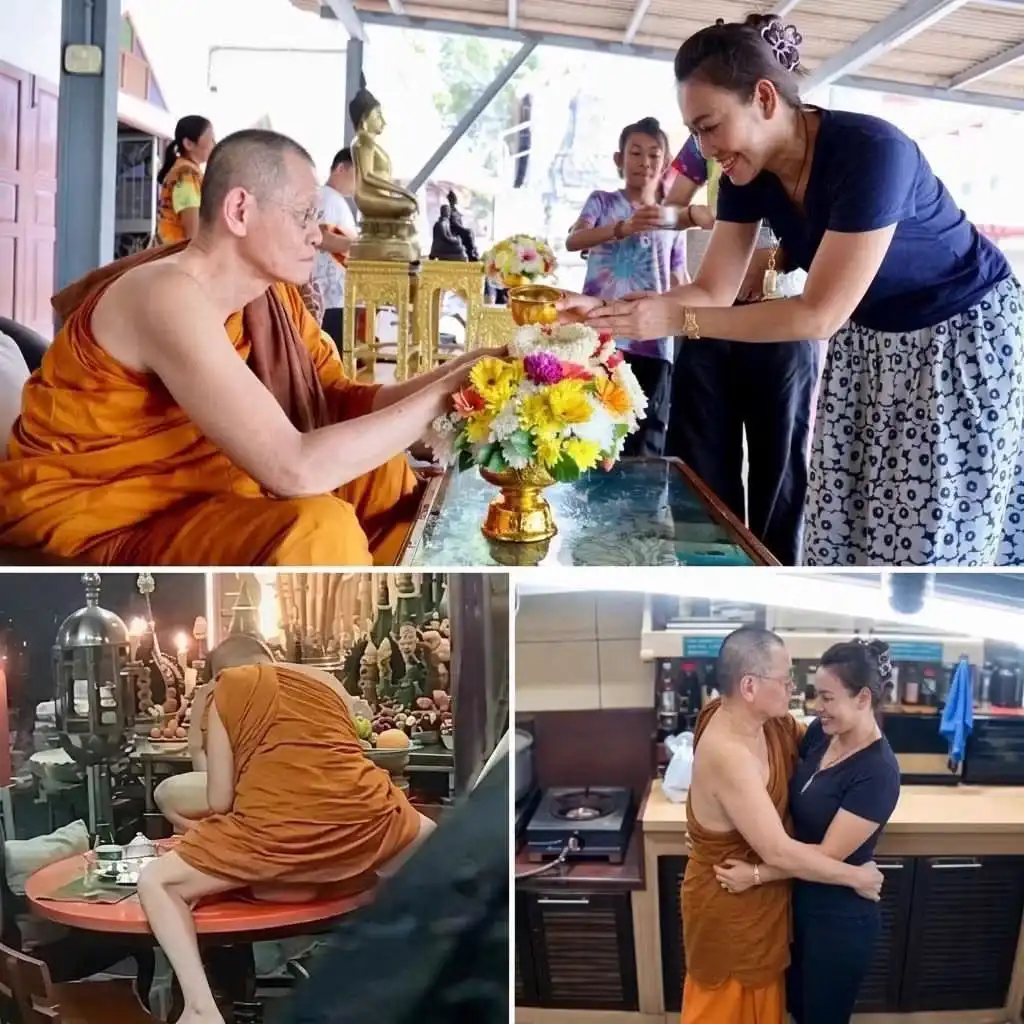
The Wat Phutthaisawan monk scandal in Thailand is not simply a story about a viral CCTV recording. At the center of the case is a police investigation into alleged misuse of temple funds, suspected money laundering, and the financial relationship between a former abbot and a female associate. The CCTV material became widely discussed because investigators reportedly found recordings showing intimate conduct inside the monk's residence during the investigation.
The case involves Phra Wachirayan Wi, also known as Luang Pho Atichot or Luang Pho Chot, a 66-year-old former abbot of Wat Phutthaisawan, a royal monastery in Ayutthaya. Thai police arrested him on September 10, 2026, under a warrant issued by the Central Criminal Court for Corruption and Misconduct Cases, Region 1. A female associate identified in Thai reports as Punyavee, also known as “Sika Ae,” was arrested in a related investigation.
The financial allegation initially described by police involved more than 92 million baht in suspected losses to the temple. Subsequent searches produced a much larger amount of seized or frozen assets, with authorities reporting assets connected to the two suspects exceeding 720 million baht. Those figures should not be treated as the same thing: the 92-million-baht figure concerns the alleged temple-fund diversion under investigation, while the larger figure refers to assets investigators seized or froze while tracing the wider financial network.
What Is the Wat Phutthaisawan Monk CCTV Scandal?
The controversy centers on events at Wat Phutthaisawan in Phra Nakhon Si Ayutthaya, Thailand.
Police became involved after receiving information alleging inappropriate conduct and possible financial irregularities involving the abbot. According to Thai PBS and other reports, the complaint reached authorities in July 2026, and investigators subsequently conducted a covert investigation into the temple's financial activity.
The investigation eventually resulted in an arrest warrant dated September 8, 2026, followed by a police operation at the temple on September 10. The charges reported against the former abbot included alleged embezzlement by an official, alleged improper or corrupt performance of duties, and conspiracy and joint money laundering.
During the investigation, officers also reviewed CCTV footage from the temple. Thai media reported that the footage showed the abbot engaging in sexual or intimate conduct with a female associate inside the monk's residence. The footage then became widely circulated in Thai media and on social platforms.
This is an important distinction: the arrest did not originate solely because of a viral CCTV video. The main criminal investigation involved alleged financial misconduct and money laundering; the CCTV footage became another major part of the case after investigators examined material connected with the temple premises.
Who Is Phra Wachirayan Wi, the Former Wat Phutthaisawan Abbot?
Phra Wachirayan Wi, also referred to in Thai reporting as Luang Pho Atichot Dhammavaro or Luang Pho Chot, was the abbot of Wat Phutthaisawan before his arrest.
Thai reports identified him as 66 years old and described him as holding the ecclesiastical rank of a third-class royal ecclesiastical title holder. He had been associated with the temple and religious objects connected with Wat Phutthaisawan, including the well-known Jatukam “Nuea Duang” amulet.
On September 10, Central Investigation Bureau officers arrested him at his monastic residence under the court warrant. Thai PBS reported that he subsequently underwent a disrobing ceremony and was then taken for further questioning by police.
The National Office of Buddhism later said that his loss of monastic status was not regarded as an ordinary voluntary disrobing under the circumstances described by officials, and that this affected his ability to reordain.
Who Is the Woman Mentioned in the Case?
The woman repeatedly named in Thai reporting is Punyavee, commonly referred to in the media as “Sika Ae.”
According to investigators' allegations, she was a close associate of the former abbot and was allegedly involved in receiving or helping convert and conceal money connected to the suspected financial misconduct.
She was arrested separately in the same broader investigation and faced allegations related to supporting the alleged offenses and participating in the suspected money-laundering activity.
It is important to distinguish an allegation in an arrest or investigation from a final criminal conviction. The reported charges and accusations are matters for the Thai judicial process to determine.
What Did Police Allegedly Discover About the Temple Money?
The financial investigation is the most substantial part of the case.
According to police accounts reported by Thai and English-language news organizations, investigators allegedly found that temple-related money had been diverted away from the temple and transferred through accounts associated with the former abbot and people close to him.
One part of the investigation involved donation acknowledgement certificates issued in the temple's name. Police said that more than 20 such documents were issued over a period exceeding two years and that the suspected financial damage exceeded 92 million baht.
Another area involved income associated with religious amulets and sacred objects. Thairath reported that investigators found money related to amulet transactions that had not been deposited into the temple's account but had instead been transferred to a foundation that authorities described as lacking authorization to operate in that manner.
Police have continued examining whether additional people, accounts or entities were involved.
On September 12, the Crime Suppression Division said investigators were tracing transactions exceeding 215 million baht and looking into possible third-party involvement. Authorities said they had not yet established the identities or roles of all potentially connected individuals.
Why Are People Mentioning 215 Million, 720 Million and 92 Million Baht?
This is one of the biggest areas of confusion surrounding the case.
Also read: Viral Controversy: Gaurav Khanna’s YouTube Channel Deleted After Bigg Boss 19 Victory
Several different numbers have appeared in reporting because they refer to different stages or categories of the investigation.
| Amount reported | What it refers to |
|---|---|
| More than 92 million baht | The approximate suspected damage tied to the alleged diversion of temple funds in the main criminal allegation |
| More than 100 million baht | A broader preliminary figure used by some Thai reports when discussing the suspected temple-fund misconduct |
| More than 215 million baht | Financial transactions/assets being examined or initially seized or frozen in parts of the investigation |
| More than 720 million baht | The larger total value of assets reported as seized or frozen in connection with the two suspects during the broader investigation |
The figures should therefore not be added together. They describe different aspects of the same expanding investigation.
What Assets Did Police Find?
On September 11, Thai authorities announced that searches of six locations had uncovered substantial assets.
Thairath reported that police found approximately 144 million baht in Thai and foreign cash, gold bars and jewelry weighing around 1,066 baht by Thai gold-weight measurement, numerous amulets, and 28 land title deeds. Officials said further investigation was necessary to determine which assets were personal and which might be connected to temple funds.
Other Thai reports later placed the combined value of seized or frozen assets linked to the former abbot and his female associate at more than 720 million baht, including bank deposits, cash, gold and property-related documents.
That does not mean police concluded that every baht of the 720 million baht was stolen from Wat Phutthaisawan. Investigators were still working to distinguish allegedly misappropriated temple funds from other assets and to establish the financial trail.
What Does the CCTV Footage Actually Show?
The CCTV issue attracted enormous public attention because it reportedly showed intimate conduct between the former abbot and the female associate inside the temple residence.
Reports described footage showing the two engaging in sexual or intimate behavior in an area of the abbot's residence. Some Thai outlets also reported that the conduct occurred around a round orange table that later became a physical item of interest during the police investigation.
The footage itself should be treated carefully.
Much of what circulated online consisted of excerpts, screenshots, or reposted versions of material originally reported by Thai media. A viral clip on social media is not, by itself, proof of every claim made around it. What matters legally is how investigators authenticated the material and how it is ultimately treated as evidence in the proceedings.
Thai authorities reportedly seized the orange round table shown in the footage as part of their evidence-gathering process. Later, the temple committee asked police to remove the table from the temple premises.
Was the CCTV Video the Reason for the Arrest?
No.
This is probably the most important fact to understand.
The arrest warrant concerned alleged financial and official misconduct, including alleged embezzlement and money laundering. The financial investigation had already been underway before the arrest.
Thai reports say investigators began looking into the abbot following an anonymous complaint in July. The police investigation then developed evidence relating to temple money, donation certificates, financial transfers and potential asset concealment. CCTV footage discovered during the investigation added evidence concerning the monk's personal conduct.
So the case is better understood as:
financial investigation → police surveillance and evidence gathering → arrest warrant → discovery/review of CCTV material → broader public scandal
rather than simply:
viral CCTV → monk arrested.
Why Was the Monk Removed From the Clergy?
Following the arrest, the former abbot was no longer a monk.
Thai PBS reported on September 10 that police took him to a senior Buddhist official in Ayutthaya, where he underwent a formal disrobing ceremony.
The National Office of Buddhism later gave additional clarification about his religious status, saying the circumstances amounted to a violation serious enough to prevent reordination.
That is separate from the criminal question of whether the financial accusations are ultimately proven in court.
Also read: Dingkari Nomil Viral Video 2026: Truth, Trends, Biography, and Internet Buzz Explained
In other words, religious disciplinary consequences and criminal liability are related but distinct legal and institutional processes.
What Charges Does He Face?
Thai reporting identifies several allegations against the former abbot.
They include alleged:
- embezzlement or misappropriation of property in his official capacity;
- improper or corrupt performance or non-performance of official duties;
- misconduct involving his role as a state official;
- conspiracy to launder money; and
- joint money laundering.
The exact legal wording varies slightly between English translations of Thai reports, but the central themes are the same: alleged misuse of official authority, alleged diversion of property or money, and suspected laundering of the proceeds.
The female associate was also arrested in connection with the financial investigation and faced allegations that she assisted with the suspected financial activity.
What Happened After the Arrest?
On September 11, police took both suspects before the Central Criminal Court for Corruption and Misconduct Cases, Region 1, in Saraburi.
The court ordered their initial detention for 12 days, from September 11 through September 23, 2026. Their requests for temporary release were denied. According to court reporting, the court cited the seriousness of the alleged offenses and concerns about possible interference with evidence while investigators were still tracing financial transactions and investigating potentially connected individuals.
As a result, both suspects were transferred to custody at Saraburi Provincial Prison.
This is an important procedural point: detention during an investigation is not the same as a criminal conviction.
Are There Other Suspects?
Police have indicated that the investigation may extend beyond the two people already arrested.
On September 12, the Crime Suppression Division said it was examining the financial trail and potential involvement of additional parties. Investigators said they suspected that one or two additional people could potentially be involved, although their identities and exact roles had not yet been established. Relevant documents were also sent to Thailand's Anti-Money Laundering Office for further examination.
This means the case was still developing when the latest widely reported updates were published.
It would therefore be inaccurate to present the investigation as completely finished.
What Happened to Wat Phutthaisawan After the Scandal?
Despite the controversy surrounding the former abbot, the temple itself continued to receive visitors.
Thai PBS reported that people continued visiting Wat Phutthaisawan after the arrest, including Buddhists coming to pay respects and tourists visiting the historical site. Police maintained restrictions around the former abbot's residence while evidence gathering continued.
The temple has a much older history than the current scandal.
The Fine Arts information database identifies Wat Phutthaisawan as an important early Ayutthaya-period temple. Historical records associate its construction with King Ramathibodi I (U-Thong) around 1353, and the main prang is regarded as an important surviving example of early Ayutthaya architecture.
The Ayutthaya provincial tourism website likewise describes Wat Phutthaisawan as a royal temple on the west bank of the Chao Phraya River and highlights its historical remains and central prang.
So the criminal investigation concerns individuals and alleged conduct; it does not change the historical identity of the ancient temple itself.
What Happened to the Temple's Bank Account?
Another detail that caused confusion online involved the temple's own funds.
By September 16, Thai reporting said police were preparing to release a freeze on approximately 71 million baht in a Wat Phutthaisawan bank account after preliminary examination indicated that the funds were not connected to the allegations under investigation.
This is significant because it illustrates why investigators have been separating the temple's legitimate funds from money allegedly diverted through other accounts.
The fact that investigators examined or froze a p
Topics: Viral
About Umesh Yadav
Avery leads editorial standards and oversees every story we publish. Previously ran entertainment desks at two national publications.
Comments