Porimonir Viral Video 2026: Maasranga TV Instagram Controversy Explained
Porimonir Viral Video 2026: Explore the Maasranga TV Instagram controversy, the online discussion, verified facts, privacy concerns, and what remains unconfirmed.
By Umesh Yadav · Published
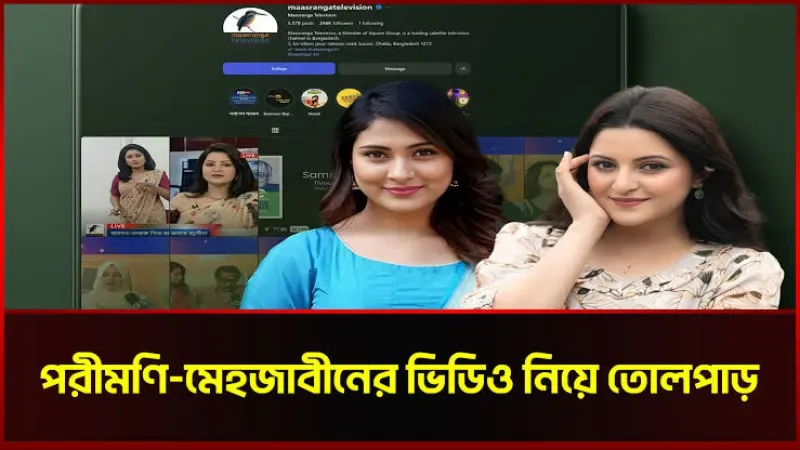
Why Is Porimonir Viral Video 2026 Trending?
The search phrase Porimonir Viral Video 2026 attracted attention in October 2026 after manipulated videos featuring the faces of Bangladeshi actresses Pori Moni and Mehazabien Chowdhury appeared on the Instagram account associated with Maasranga Television. The incident quickly became a wider discussion about artificial intelligence, online privacy, media responsibility, and the dangers of spreading unverified content.
The controversy wasn't simply about a viral post. It raised a more serious question: what happens when fabricated material appears on the social media account of a recognised television broadcaster?
According to reporting by Bangladeshi fact-checking organisation Rumor Scanner, the two videos associated with the actresses had been manipulated using face-swapping technology. Maasranga Television said its Instagram account had been hacked and that fabricated content had been uploaded without authorisation. The broadcaster subsequently removed the disputed videos and said it would pursue legal action.
The actresses' names became widely associated with the incident, but the crucial distinction is that the videos were not authentic recordings of the women performing the acts depicted. The fact-checking findings are essential to understanding the controversy accurately.
This article examines the available reporting, the broadcaster's explanation, the public reactions, and the wider lessons about AI-generated misinformation. It doesn't reproduce the manipulated footage or direct readers to websites distributing it.
1. What Happened in the Maasranga TV Instagram Controversy?
The controversy became public on October 13, 2026, when objectionable videos appeared on Maasranga Television's Instagram account. Reports described five videos containing inappropriate material, including two manipulated clips associated with Pori Moni and Mehazabien Chowdhury.
The posts attracted attention because they appeared on an account linked to an established television broadcaster. Viewers naturally began questioning how such content could appear on a professional media organisation's profile.
As screenshots and discussions circulated, the incident moved beyond the original Instagram posts. Users began searching for information about the videos, the actresses, and the channel's explanation.
A timeline of the reported incident
Date | Reported development |
|---|---|
October 13, 2026 | Controversial videos appeared on Maasranga Television's Instagram account and prompted online discussion. |
October 13, 2026 | The broadcaster said its account had been compromised and that fabricated content had been published. |
October 13–14, 2026 | The disputed videos were removed, and questions about the account's security and activity continued. |
October 14, 2026 | Rumor Scanner published findings that the two videos had been edited using face-swapping technology. |
October 15–17, 2026 | Further reports covered criticism from the actresses and the debate over AI-generated abuse and media accountability. |
The sequence is supported by reporting from Rumor Scanner and Prothom Alo.
Why did the posts attract so much attention?
Three factors helped the story spread.
First, the account was associated with a known television channel. Second, the names of two recognisable actresses were connected to the disputed material. Third, the controversy involved a technology that can make fabricated footage appear convincing to unsuspecting viewers.
However, a post's appearance on a verified or familiar account doesn't establish that its contents are genuine. Accounts can be compromised, misleading material can be uploaded, and manipulated footage can circulate even after its original source has been removed.
The central lesson is straightforward: the source, context, and authenticity of a video matter more than its popularity.
2. Who Is Porimoni? Understanding the Actress at the Centre of the Story
Pori Moni, also written as Porimoni or Porimonir in Bengali-related search phrases, is a Bangladeshi film actress known for her work in the country's entertainment industry.
Her public profile and established screen career mean that stories involving her can attract significant attention. That attention can be positive when it concerns films, performances, interviews, and professional achievements. It can also become harmful when her name is attached to fabricated or misleading online content.
Also read: Gangu Chettri Viral Video: Fact-Check of the 7.2-Minute
In this case, her name became associated with videos that fact-checkers identified as manipulated. That distinction matters because an edited video cannot establish that the person whose face appears in it actually participated in the depicted activity.
Why is the spelling Porimoni used in searches?
Search engines commonly group variations of names together. People may search for Pori Moni, Porimoni, Porimonir viral video, or Pori Moni Instagram controversy when looking for information about the same incident.
The spelling variation doesn't indicate that these phrases refer to different people or separate confirmed events.
For readers and publishers, the better approach is to use a familiar name naturally while ensuring that the article explains what has actually been verified.
Separating an actress's career from a viral controversy
A celebrity's public work shouldn't be confused with unrelated or fabricated material circulated online.
When reporting on an incident like this, responsible coverage should focus on:
The confirmed timeline of the incident.
The findings of credible fact-checkers.
The statements issued by the broadcaster and the people affected.
The consequences of impersonation and unauthorised content sharing.
Any verified updates about investigations or legal action.
It shouldn't use the incident to make unsupported claims about the actress's private life.
The phrase Porimonir Viral Video 2026 may attract search traffic, but readers deserve an explanation that distinguishes evidence from speculation. The same standard applies to any public figure whose name is connected to manipulated images, recordings, or social media posts.
3. What Did Maasranga Television Say About Its Instagram Account?
Maasranga Television said its official Instagram account had been hacked and that fabricated images and videos created through the misuse of artificial intelligence had been published.
According to the broadcaster's explanation, the account's security breach prevented the organisation from removing the disputed content immediately. The channel said it recovered control of the account, removed the material, and intended to take legal action against those responsible.
The broadcaster also expressed regret over the incident.
These statements are important because they provide the organisation's explanation for how the material appeared on its profile. However, the exact circumstances of the reported breach and the identity of the person or people responsible should not be presented as independently established unless supported by further evidence.
Why did the account's activity become a subject of debate?
Rumor Scanner's investigation examined activity on the Instagram profile around the time the disputed videos appeared.
Its report noted that other news content had continued to appear on the account during the period in question. It also examined previously published material and account activity, raising questions that required explanation.
Maasranga Television's representative responded that its Instagram account was connected to its Facebook page and that content published on Facebook could automatically appear on Instagram. The broadcaster also explained that it had difficulty removing certain posts while it was trying to regain control of the account and associated advertising tools.
Also read: Sam Medel Viral Video: Filipino Vlogger Sparks Online
These details help explain why questions emerged, but they don't independently identify the person responsible for the disputed uploads.
What is confirmed, and what remains unresolved?
Question | Available information |
|---|---|
Did disputed videos appear on the account? | Yes, according to contemporaneous reporting. |
What was the broadcaster's explanation? | It said the account had been hacked. |
Were the videos authentic recordings of the actresses? | Rumor Scanner found that the videos were manipulated. |
Were the videos subsequently removed? | Yes, according to the reporting. |
Who created or uploaded the material? | The available reports reviewed for this article don't establish the responsible individuals' identities. |
What was the final legal outcome? | A final outcome hasn't been established in the reporting reviewed here. |
This distinction is particularly important in a developing story. An organisation's statement should be accurately attributed, and unresolved questions should remain unresolved until reliable evidence answers them.
4. Fact-Check: Were the Porimonir Viral Video Claims Real?
The most important finding in the Porimonir Viral Video 2026 controversy comes from Rumor Scanner, a Bangladeshi fact-checking organisation.
In its October 14 investigation, Rumor Scanner reported that the two disputed videos were edited. Its researchers located the original versions of the footage and found that the actresses were not present in those original recordings. Face-swapping technology had been used to place their faces onto other footage.
This finding changes how the incident should be understood. The videos weren't reliable evidence of the actresses' real actions.
Readers can consult the original investigation through Rumor Scanner's report. Additional coverage appeared in Prothom Alo and The Daily Star.
How does face-swapping work?
Face-swapping technology can replace one person's face with another person's likeness in a photograph or video. Modern AI tools can make these alterations look convincing, especially when viewers see only a short clip without the original footage or surrounding context.
The technology has legitimate uses in filmmaking, visual effects, and creative production. However, it can also be abused to impersonate people or create misleading material without their consent.
A fabricated video may appear realistic, but realism isn't proof of authenticity.
What evidence should readers look for?
When a controversial video appears online, readers should consider several questions:
Is there an original source? A repost doesn't establish where a clip first appeared or who created it.
Has a credible fact-checker investigated it? Independent examination can help establish whether footage has been manipulated.
Is there supporting evidence? Reliable reporting should distinguish direct evidence from speculation.
Has the person or organisation issued a statement? Statements can provide context, but their claims should be attributed correctly.
Could the video have been edited? Face swaps, misleading captions, altered audio, and clips taken out of context can all distort the truth.
In this case, the published fact-checking findings provide a stronger basis for understanding the incident than anonymous posts or headlines promising access to the footage.
Why the distinction matters
Calling the videos authentic would misrepresent the findings and could further harm the people whose likenesses were used.
The responsible conclusion is that the disputed footage was manipulated, according to Rumor Scanner. The incident should therefore be discussed as a case involving fabricated content, not as evidence of the actresses' private behaviour.
5. How AI Face-Swap Technology Can Mislead Social Media Users
Artificial intelligence has made it easier to produce altered images, voices, and videos. Some tools require technical expertise, while others are designed for ordinary users with little editing experience.
Also read: Baby Monkey Viral Video Allegedly Being Bullied at Japan Zoo Sparks Global Animal Welfare Outrage
This creates a serious challenge for social media platforms and audiences. A video that once required extensive editing skills may now be created or modified with relatively accessible software.
Why manipulated videos can look believable
Several factors can make altered footage seem genuine:
Familiar faces: Viewers may recognise a celebrity and assume the footage is real.
Short clips: Brief videos may not provide enough context to reveal inconsistencies.
Emotional reactions: Shock, anger, or curiosity can discourage careful verification.
Repeated sharing: Seeing the same clip on several accounts may create a false impression of independent confirmation.
Misleading captions: A caption can claim that footage is authentic without providing evidence.
These factors can combine to make a fabricated video spread rapidly.
Deepfakes and face swaps are not proof of real events
The term deepfake is often used broadly for AI-generated or manipulated media that imitates real people. Face-swapping is one method of creating such material.
Not every manipulated clip is produced using the same technology, and not every misleading video is entirely AI-generated. Some are created through conventional editing, while others combine original footage with synthetic elements.
The important question is whether the content accurately represents the person or event it claims to show.
What can ordinary viewers do?
Viewers don't need advanced technical skills to practise better digital habits.
They can pause before sharing, search for reputable coverage, check whether an original source exists, and look for fact-checking reports. If a video appears designed to humiliate someone, they can avoid forwarding it even when they're unsure whether it's genuine.
No single visual clue can reliably identify every manipulated video. Careful verification is more dependable than guessing based on appearance alone.
6. Porimoni's Reaction and the Impact of Online Harassment
The incident also drew attention to the personal consequences of fabricated content.
Reporting published by Bangladeshi news outlets described Pori Moni criticising Maasranga Television's response. In a Facebook Live session and subsequent social media posts, she questioned whether an apology was enough to address the damage caused by the incident.
She also expressed concern about the effect of the controversy on her everyday social media activity, work, and family. Reports said that even posts featuring her children attracted hostile comments.
These concerns illustrate why the effects of manipulated content can continue long after the original posts have been deleted.
Why deleting a post may not end the damage
A viral video can be copied, downloaded, recorded from a screen, and reposted on other accounts. Search results may continue to display headlines about the incident, while new posts can revive the discussion.
As a result, removing the original upload doesn't necessarily remove every copy or correct every false impression.
Also read: Sara Baloch Viral Video Leak: Real or Fake? What Really Happened?
The person targeted may then have to respond to questions, unwanted attention, abusive comments, and reputational concerns even when the material has been shown to be fabricated.
The role of online audiences
Users aren't responsible for creating every piece of harmful content they encounter. However, they do make choices about whether to amplify it.
Sharing a clip with a mocking caption, posting an unverified download link, or tagging a person in a humiliating discussion can increase its reach.
A more responsible response is to share verified reporting about the incident rather than the manipulated footage itself.
Why empathy matters
Public figures are often discussed as if their fame removes their right to privacy. It doesn't.
Being a celebrity doesn't make someone responsible for fabricated material created using their likeness. Nor does public curiosity justify distributing content that may cause further harm.
The lesson applies to everyone, including ordinary people whose photographs or videos might be manipulated and circulated without consent.
7. Mehazabien Chowdhury's Response and the Wider Debate
Mehazabien Chowdhury, another Bangladeshi actress whose likeness was associated with the manipulated videos, also spoke out against the incident.
According to Prothom Alo's report, she criticised the creation and distribution of fabricated AI content intended to humiliate people. Her response placed the focus on a broader issue: the responsibility of those who create such material and those who knowingly spread it.
The controversy therefore affected more than one public figure. It raised questions about how easily a person's identity can be misused in digital spaces.
Why this debate extends beyond celebrities
AI-generated impersonation can affect people in many circumstances, including:
Public figures targeted by fabricated videos.
Professionals whose reputations could be damaged by misleading media.
Students and young people targeted through edited photographs.
Private individuals whose personal images are circulated without permission.
The consequences can include harassment, embarrassment, emotional distress, and loss of trust.
The risk becomes more serious when fabricated content is presented as authentic or shared alongside claims designed to encourage ridicule.
Is sharing the content harmless if the uploader didn't create it?
Not necessarily.
A person who reposts fabricated content may not have c
Topics: viral video fact check, Porimoni, Pori Moni, Maasranga TV,, Instagram Controversy, Bangladesh Entertainment News, AI Deepfake
About Umesh Yadav
Avery leads editorial standards and oversees every story we publish. Previously ran entertainment desks at two national publications.
Comments